

Your Finish Is Only As Good As Your Brush

Your Finish Is Only As Good As Your Brush
A polished groom does not begin with the final cut. It begins with the right brush in hand — one that suits the coat, the task, and the groomer. This guide covers which brush to reach for and why.
Most finishing problems are not finishing problems at all. They begin earlier — in the wrong brush for the coat type, or a tool that is past its best and dragging where it should glide. The right brush does not just speed up the groom. It changes what the coat is capable of doing.
Understanding Brush Types
Different brushes are built for fundamentally different tasks. Using the right one from the start reduces resistance, protects the coat, and gives you better control through every stage of the groom.
Slicker Brushes
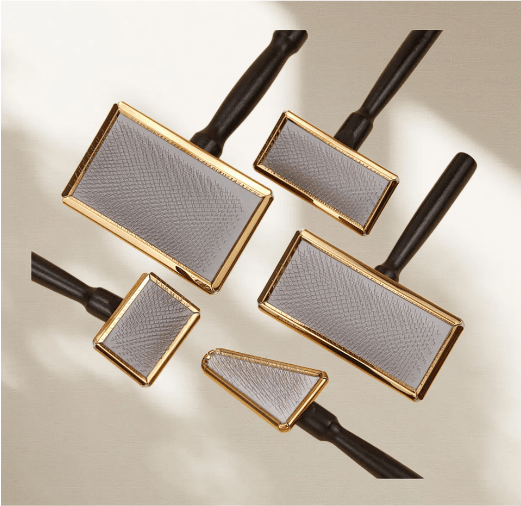
Fine, angled wire pins set close together. Built for detangling, removing loose coat, and smoothing before finishing. Best suited to medium, long, and double coats where debris and matting are common.
Pin Brushes
Longer, widely spaced stainless steel pins. Designed for lift, volume, and coat separation rather than deep detangling. The finishing tool of choice once the coat is already clear.
Triangular / Detail Brushes
A shaped head that fits tight anatomical areas — faces, underarms, feet, tail. Gives controlled access where standard brush shapes become clumsy or too wide.
Puff & Fluff Brushes
Purpose-built for volume finishing and fluffing out the coat after drying. Particularly effective on Spaniels, Poodles, Bichons, and any breed where coat height and presentation matter.
Matching Brush to Coat Type
The coat type determines where you start, not just what you use. A slicker on a fine single coat risks irritation. A pin brush through a dense double coat before detangling achieves very little. Getting the match right is what makes the rest of the groom feel easier.
| Coat Type | Recommended Brush | Why |
|---|---|---|
| Short, smooth single coat | Light slicker or rubber brush | Removes loose hair without overstimulating the skin |
| Medium, wavy, or silky coat | Lustré Triangular or Medium pin brush | Lifts and separates without flattening natural wave and texture |
| Long, flowing or drop coat | Pin brush, then slicker on problem areas | Maintains coat fall while working through any tangles methodically |
| Dense double coat | TKO Slicker, then pin brush for finish | Penetrates undercoat first; pin brush finishes topcoat presentation |
| Curly or wool coat (Poodle, Bichon, Doodle) | Puff & Fluff, slicker, then Lustré for finish | Volume, controlled separation, and a clean lifted finish before scissoring |
| Spaniel, Setter, Feathered coat | Slicker on feathering, Lustré Triangular for ears and detail | Precise access to delicate zones without dragging fine feathering |
Brush by Finishing Task
Even within the same groom, the right brush changes depending on what stage you are at. These are the three brushes from the Pewtner range most groomers are reaching for, and where each one fits.
The Pewtner Puff & Fluff Brush
Volume and fluff finishing. Use after drying on curly, wool, and fluffy coats to lift and open the coat before scissoring. Removes the flat look that blow-drying can leave and gives groomers a cleaner working surface to scissor against.

Pewtner Lustré Brush – Triangular
Detail and precision finishing. Built for the areas a standard brush cannot reach cleanly — faces, ears, underarms, paws, and tail. Staggered 1.2 cm stainless steel pins with a rose gold stainless steel back and wooden ergonomic handle.

TKO Slicker Brush
Detangling and coat prep. Fine wire pins work through dense, matted, or debris-heavy coats without excessive drag. A reliable daily workhorse brush for salon throughput, particularly on double-coated and doodle breeds.

The Lustré Range
Available in Small, Medium, Large, and Triangular. Each shares the same pin specification and build quality. Choose by coverage area — Small for precision, Medium for daily versatility, Large for wide body sections and high-density coats.
When to Replace a Brush
A worn brush does not just perform less well. It actively works against the coat. Bent or splayed pins drag instead of penetrate. Worn cushioning reduces the spring that makes detangling smooth. An overworked slicker can cause unnecessary skin irritation even when technique is sound.
- Pins are visibly bent, kinked, or no longer sitting uniformly
- The cushion pad has hardened, cracked, or lost its flex
- The brush drags noticeably through coat that it previously moved through cleanly
- The handle is uncomfortable after extended use due to wear or damage
- You are compensating with extra pressure — a sign the tool is working against you
For high-volume salon environments, assess brushes every three to four months as a standard practice rather than waiting for visible failure. Brushes used exclusively on dense or double coats may need replacing sooner.
A Better Brush Makes Every Next Step Easier
Brushing does not sit in isolation. It affects everything around it. A coat that has been prepared properly is easier to comb through, easier to scissor, and easier to refine. The brush is what helps the rest of your system work properly.
The Brush Behind the Finish
Great finishing does not come from forcing the final look into place. It comes from preparing the coat properly so every next step feels cleaner, smoother, and more controlled.
That is the quiet power of a strong brush selection. Better prep. Better lift. Better silhouette. When the coat responds well, the rest of the groom follows.
Shop Dog Grooming Combs & Brushes
Explore the full range of professional grooming brushes — slicker, pin, puff, and detail — all in one place.
Shop Dog Grooming Combs & BrushesFrequently Asked Questions
What is the difference between a slicker brush and a pin brush?
A slicker brush uses fine, closely packed angled wire pins to detangle and remove loose coat. A pin brush has longer, more widely spaced pins and is designed for lifting, separating, and finishing once the coat is already clear. Most professional grooms use both at different stages.
Which brush is best for Doodles and curly coats?
Start with the TKO Slicker to work through the coat and remove debris, then use the Puff & Fluff Brush after drying to restore volume before scissoring. The Lustré Triangular is useful for face and paw detail work.
When should I use the Lustré Triangular over the standard Lustré brushes?
The Lustré Triangular is specifically designed for tight and delicate areas where a standard rectangular brush shape creates too much contact — faces, ears, underarms, paws, and tail sets. Use it wherever precision matters more than coverage.
How often should I replace my grooming brushes?
As a general guide, inspect brushes every three to four months in a busy salon environment. Replace when pins are bent or no longer uniform, when the cushion has lost its flex, or when you notice yourself applying more pressure to achieve the same result as before.
Prep Better. Finish Better.
If the coat is not prepared properly, the finish will never reach its full potential. The right brush, matched to the coat and the task, is where every great groom begins.
Shop Dog Grooming Combs & BrushesRelated Posts

Groomfest Sunday 6th September 2026

The Pewtner Comb System: Every Comb You Need for a Flawless Finish

Curve Control, But Make It Celestial 🌙✂️

Why Groomers Are Switching to Happy Strappys Premium Grooming Straps

Look Professional, Feel Pewt: The Power of the Right Grooming Workwear